THE “BIG SHIFTS” AND THE HOTEL INDUSTRY
Interview with Oona Horx-Strathern
How do mega-trends in our society impact on hotel architecture, design and concepts? Why will hotel developers increasingly need to position themselves as guardians of a mobile lifestyle in future? An outlook by futurologist Oona Horx-Strathern.
What fundamental changes to our lives are afoot as the 21st century progresses? We can obtain essential answers to this question by observing and considering the mega-trends - those sustained forces of change that are propelling us into the future. Let us take a look at these driving forces of change:
1. Ageing:
This changes the nature of our life cycles. Ageing is no longer synonymous with “growing old” in the sense of diminishing mobility and vitality. On the contrary: increasing numbers of people are taking up a host of multi-mobile activities in their sixth and seventh decades. They travel, continue their education, search for their identity, pursue their interests, taking ownership of their world in the most diverse ways.
2. Urbanisation:
In 2050, around 75 % of the global population will be living in cities. Neo-urban life is changing tastes, needs, forms of mobility, values across the board. It is spawning new forms of design, manifested in the style of the new urban boutique and designer hotels.
3. Connectivity:
“Always on” is the motto of the age. The internet is spreading its wings and its influence on the man/machine interface and between machines is forever growing.
4. Individualisation:
Up to 50 % of all people in conurbations live in one-room apartments. But does this mean they lead isolated existences?
In order to understand the future, one must appreciate that trends are never linear in nature. Every mega-trend incorporates a counter-trend, a recursion. “Ageing” actually makes us younger, for example - on average, every age cohort today is healthier and more vivacious than in former times. And with regard to individualisation - alongside the wish for services at a remove from the mass market and tailored more specifically to the individual, this trend also engenders a new yearning for the communal.
This is manifested in numerous cooperative ventures, from co-living through co-gardening and co-working to the sharing economy. A new, self-organised sociality is arising in which individuals enter into agreements as free agents. The emergence of portals such as Airbnb attests to people’s wishes to even turn their homes into alternative “hotels” and share their own four walls with guests. In this new cooperative individual culture, health is not merely tantamount to the absence of illness in the medical sense. Health is also about experiencing vitality, balance and body sense.
Connectivity, this strong force linking everything up, also gives rise to a great counter-yearning: to be disconnected from it all: to switch off, to escape the terror of round-the-clock accessibility, the tortuous complexity of interconnected life, to rediscover the direct touch and feel of our surroundings. The underlying trend is towards “slow architecture”, as part of the broader “slow movement”. For hotels, this means that the simple hi-tech upgrading of rooms is likely to be counter-productive. The onus must be on a new, sophisticated approach to integrating technology into the sensuous world around us.
A look at the travel sector clearly reveals which hotel developers are actively taking the complex mega-trends on board - and who is not. It is not about surfaces or design details, it is about fundamentally intelligent concepts. A new (young) type of urban hotel is evolving all over the world in which work and life are re-combined - in refuges for the nomads of the global creative class. The new type of holistic “healthness” hotels attend not only to their guests’ relaxation along old-school wellness lines, but also to spiritual issues. Hyper-urbane loft and lounge concepts stray into the territory of rural and scenic hotels, experimenting with new combinations of nature, ecology and coolness. Hotel bathrooms at the new global resorts are a far remove from the functional facilities of old, endeavouring rather to symbolise the flow of life’s vital forces.
Philosopher and architecture connoisseur Alain de Botton has noted that in the mobile age “our houses and apartments must no longer necessarily safeguard our identity and status.” He argues that we can equally be at home at an airport or a special type of service station.
In future, hotel developers will increasingly position themselves as guardians of a mobile lifestyle. The focus is not so much on the size of a property, but on the standard of service offered. Not so much on “architecture” in the sense of bricks and mortar, but rather on the holistic experience accommodated in the building. Hotels will become clubs championing an aware lifestyle of “mindfulness”.
About the interviewee:
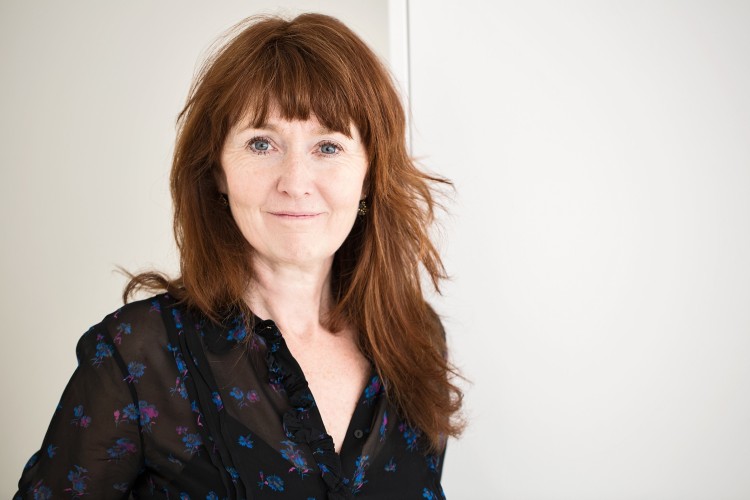
London-born Oona Horx-Strathern has been working as a trend researcher, consultant and author in England, Germany and Austria for a good 20 years. As a trend consultant, Oona Horx-Strathern has written and worked for international companies such as Unilever, Beiersdorf, Philip Morris and Deutsche Bank.