"Healing architecture" and "universal design"
Villeroy & Boch engages in dialogue with experts on accessible and age-related design
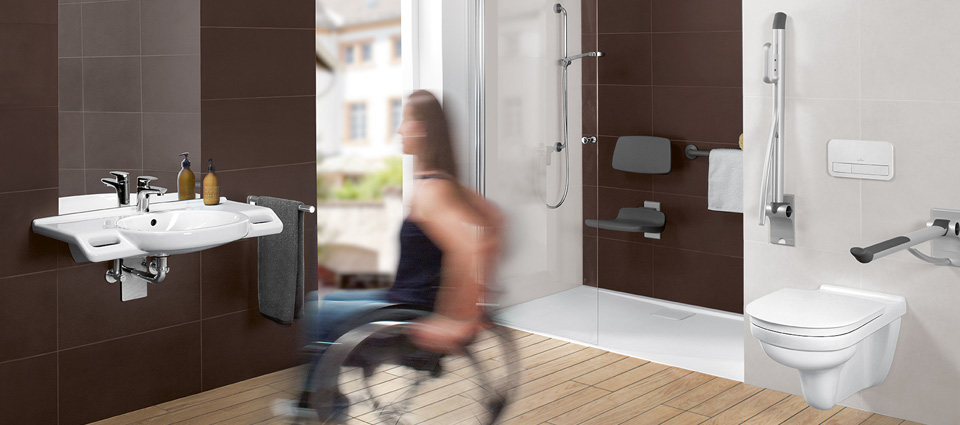
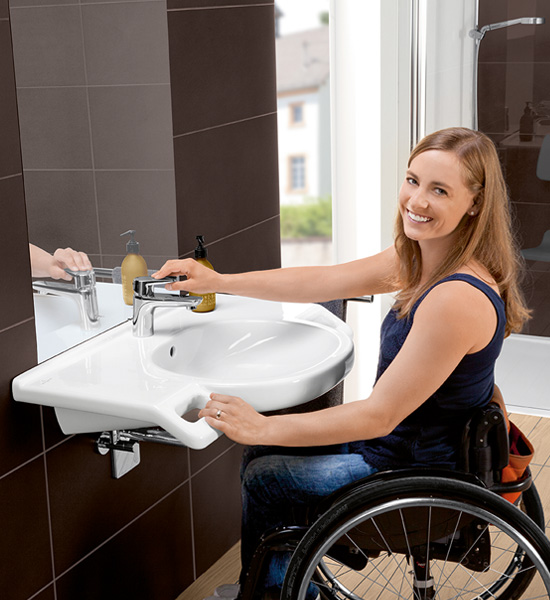
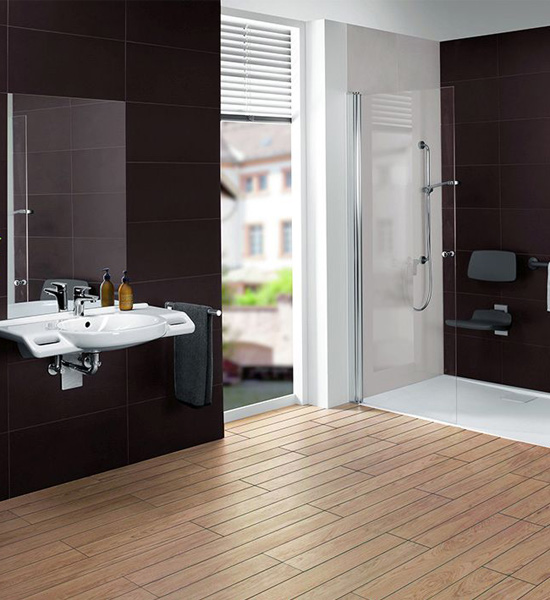
Building concepts tailored to health, nursing or specific living situations - linked to issues of health care, hygiene and, in particular, accessibility - are becoming increasingly important in view of today's ageing populations and the continuous emergence of new diseases and drug-resistant germs. The challenge in today's society lies in creating spaces and concepts suitable for all age groups and circumstances, a so-called "universal design" allowing people to live independently and autonomously for as long as possible, overcoming the social constructs of disability and age. Reflecting the company's holistic approach to bathroom design, Villeroy & Boch develops integrated concepts and products underpinned by stringent design criteria. Avoiding any stigmatising or exclusively functional appearance, they take into account the changing face of society and make everyday life easier for many people affected by physical disabilities in particular.
To support this approach, Villeroy & Boch works closely with experts from the fields of architecture and research, as well as people personally affected by physical disabilities. Including Anna Schaffelhuber, winner of five gold medals at the 2014 Sochi Paralympics; Julian Weyer, an architect and partner at the Danish practice C. F. Møller Architects in Copenhagen and Aarhus, and Jan van Zeijl, a clinical microbiologist at IZORE, a centre for infectious diseases in Friesland.
Accessibility, and consequently the issues of autonomy and design, are also important considerations for public facilities and hospital buildings. The aim is to create spaces conveying a feeling of everyday life, or even a holiday atmosphere, to foster the healing process.
During a series of lectures entitled "In need of care – supporting spaces in urban environments" organised in cooperation with AIT, Julian Weyer talked about a radical and unprecedented shift in Danish health care, accelerating the implementation of this kind of "healing architecture". The country is developing a completely new health care infrastructure at a national level to address the current unsustainably high - in both staffing and cost terms - number of hospitals. Seven "super hospitals" (highly specialised (university) clinics) are being built at central locations throughout Denmark. In these new hospitals, architecture is being used to pave the way for future savings. As well as reductions in staffing costs, the layout and features are designed specifically to promote the healing process, with single rooms, lots of natural light, good artificial lighting, rooms with a view of green spaces or open skies and incorporating wooden surfaces.
Hygiene is another key consideration in relation to accessibility. A crucial factor in health care contexts, it is becoming increasingly important for sanitary installations. To address this concern, Villeroy & Boch has developed, in consultation with Jan van Zeijl and IZORE, integrated hygiene solutions designed to improve product properties, such as the AntiBac antibacterial glaze, the CeramicPlus dirt-repellent surface finish and the rimless DirectFlush technology. An example from the Netherlands illustrates the importance of this issue in the health care and nursing sector. In 2014, the University Medical Center in Groningen became the first hospital to equip all its WC facilities according to stringent hygiene standards using Villeroy & Boch products.
To help Villeroy & Boch maintain its strong positioning in the market and continue to develop innovative products and concepts, the company seeks continuous exchanges and dialogue with architects from the health & care sector. To support its aim of incorporating new approaches, findings and ideas in future product design.